“Recovery takes a few weeks.” You’ve probably heard that before. It’s vague, it’s unhelpful, and for most people planning a procedure around work, family, and real life, it’s just not good enough.
Here’s a more useful truth: plastic surgery recovery time varies significantly by procedure, and it varies even more depending on how well you prepare and recover. A rhinoplasty and a tummy tuck are not the same conversation.
This guide covers everything you actually need to know:
- The difference between recovery time and healing time
- Procedure-by-procedure breakdowns for face, breast, and body surgeries
- The factors that make your recovery faster or slower
- What a typical week-by-week recovery looks like
- How integrated wellness protocols can shorten your timeline versus standard care
- Red flags to watch for during recovery
At Aestira, every surgical plan comes with a built-in recovery strategy. Dr. Zeng and his team design your post-op care with the same precision as the procedure itself, so your timeline isn’t left to chance. Our wellness protocols are the difference between a rough recovery and a smooth one.
Recovery Time vs. Healing Time: Not the Same Thing
Most people use these two terms interchangeably. They should not. Understanding the difference is the first step in setting realistic expectations for your plastic surgery recovery.
Recovery time is functional. It refers to how long before you can return to work, drive, take care of daily tasks, and generally function in your normal life. For many procedures, this window is measured in days to a few weeks.
Healing time is biological. It is the process your body goes through to fully repair surgical sites, remodel scar tissue, and produce final results. This process continues quietly under the surface long after you feel completely back to normal. For more extensive procedures, full healing can take up to six months or longer.
Here is a simple way to think about it:
| Recovery Time | Healing Time | |
|---|---|---|
| Definition | When can you resume daily life | When your body fully repairs internally |
| Measured by | Activity level, return to work | Swelling resolution, scar maturation |
| Typical range | Days to a few weeks | Weeks to up to six months or more |
| Visible sign | You feel and look presentable | Final results are fully apparent |
Why does this matter? Because patients who confuse the two tend to either push too hard too soon, or worry unnecessarily when residual swelling lingers weeks into recovery. Both are avoidable with the right expectations from day one.
Pro tip: just because you feel good does not mean your surgical sites are done healing. Trust your surgeon’s instructions, not just how you feel.
Procedure-by-Procedure Recovery Breakdowns
No two plastic surgery procedures recover the same way. Below is a clear breakdown of average recovery times across the most popular cosmetic procedures, covering facial procedures, breast surgery, and body contouring.
Facial Procedures
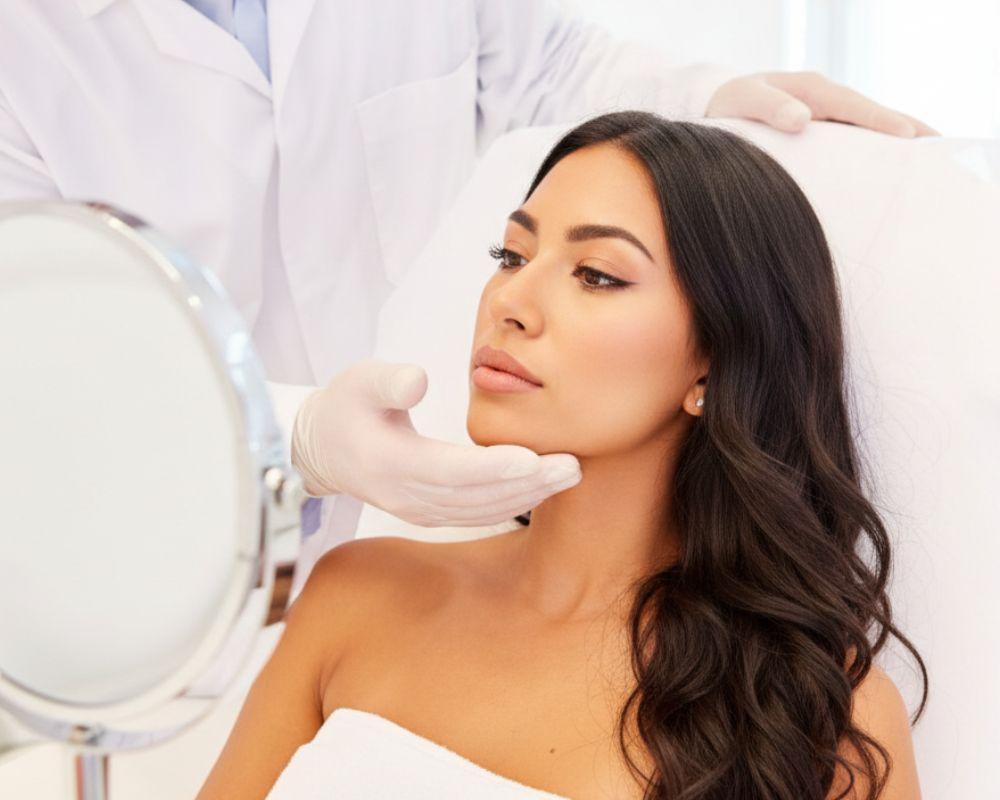
Facial rejuvenation procedures tend to involve visible bruising and swelling in the early recovery phase, which means social downtime matters as much as physical downtime.
| Procedure | Typical Light Work | Typical Heavy Work | Typical Exercise | Aestira Light Work | Aestira Heavy Work | Aestira Light Lower Body Exercise | Aestira Heavy Lower Body Exercise | Aestira Light Upper Body Exercise | Aestira Heavy Upper Body Exercise | Aestira Unrestricted Exercise |
|---|---|---|---|---|---|---|---|---|---|---|
| Brow Lift | 2 weeks | 4 weeks | 4 weeks | 1 week | 3 weeks | 1 week | 2-3 weeks | 1 week | 2-3 weeks | 3 weeks |
| Face Lift | 4 weeks | 4-6 weeks | 4-6 weeks | 1-2 weeks | 3-4 weeks | 1 week | 2-3 weeks | 1 week | 2-3 weeks | 3 weeks |
| Neck Lift | 4 weeks | 4-6 weeks | 4-6 weeks | 1-2 weeks | 3-4 weeks | 1 week | 2-3 weeks | 1 week | 2-3 weeks | 3 weeks |
| Lip Lift | 2-3 weeks | 4 weeks | 4 weeks | 1-2 weeks | 3-4 weeks | 1 week | 2-3 weeks | 1 week | 2-3 weeks | 3 weeks |
| Rhinoplasty | 2 weeks | 4-6 weeks | 6-8 weeks | 1 week | 4 weeks | 1 week | 3-4 weeks | 1 week | 3-4 weeks | 4-5 weeks |
| Blepharoplasty | 1-2 days | 2 weeks | 2 weeks | 3-5 days | 1-2 weeks | 4 days | 2 weeks | 4 days | 2 weeks | 2 weeks |
| Fat Transfer (face) | 1-2 days | 1 week | 1 week | Immediately | Immediately | 1 day | 2 weeks | 1 day | 2 weeks | 2 weeks |
| Jaw Contouring | 3-4 weeks | 6-8 weeks | 4-6 weeks | 2-3 weeks | 4 weeks | 1 week | 2-3 weeks | 1 week | 2-3 weeks | 3-4 weeks |
| Restora Lift | 4-6 weeks | 6-8 weeks | 6 weeks | 2 weeks (1 week if Zoom only) | 4 weeks | 1 week | 2-3 weeks | 1 week | 2-3 weeks | 4 weeks |
Facelift
Facelift surgery is one of the more involved facial rejuvenation procedures. Swelling typically peaks around day three post-op, and most facelift patients can expect visible healing to become presentable by about two weeks. The facelift recovery timeline for full resolution of residual swelling and final results, however, extends to three to six months. Strenuous activity should be avoided for at least three to four weeks.
At Aestira, our facelift recovery protocols focus on reducing postoperative swelling early through integrated wellness therapies, helping patients move through the initial healing phase faster than typical recovery timelines suggest.
Neck Lift
A neck lift follows a similar recovery arc to a facelift. Most patients return to desk work within one to two weeks, with compression garments recommended for the first week to minimize swelling. Final results settle over three to four months as scar tissue matures and skin adapts.
Brow Lift
The brow lift has one of the shorter recovery periods among facial procedures. Most patients are back to light activity within one week, with bruising and swelling largely resolved by about two weeks. Full healing progress continues over several months.
Eyelid Surgery (Blepharoplasty)
Eyelid surgery recovery is relatively quick. Most patients resume light activities within just a few days, with swelling and bruising visibly resolving within one to two weeks. Prolonged bruising is uncommon but possible depending on individual factors. Final results become apparent within six to eight weeks.
Rhinoplasty
Rhinoplasty recovery is unique because while patients return to work within about one to two weeks, residual swelling in the nasal tip can persist for up to twelve months or longer before final results are fully visible. The nose is simply one of the slower structures to settle post-surgery.
Lip Lift
The lip lift is one of the more straightforward facial procedures in terms of recovery. Most patients are back to light work within one to two weeks, with incision healing progressing steadily over the following month.
Jaw Contouring
Jaw contouring recovery involves notable swelling for the first two to three weeks. Most patients return to non-physical work within two to three weeks, with full softening of postoperative swelling taking three to four months.
Breast Procedures

Breast surgery recovery generally allows for an earlier return to light activity, but upper body restrictions remain in place for several weeks to protect healing incisions.
| Procedure | Typical Light Work | Typical Heavy Work | Typical Exercise | Aestira Light Work | Aestira Heavy Work | Aestira Light Lower Body Exercise | Aestira Heavy Lower Body Exercise | Aestira Light Upper Body Exercise | Aestira Heavy Upper Body Exercise | Aestira Unrestricted Exercise |
|---|---|---|---|---|---|---|---|---|---|---|
| Augmentation (Under the Muscle) | 2-3 weeks | 6 weeks | 6 weeks | 1 week | 3-4 weeks | 1 week | 2 weeks | 1 week | 2-3 weeks | 3 weeks |
| Augmentation (Over the Muscle) | 2-3 weeks | 6 weeks | 4-6 weeks | 2-3 days | 4 weeks | 1 week | 2 weeks | 1 week | 2 weeks | 2 weeks |
| Natural Augmentation (Fat Transfer) | 2 weeks | 4-6 weeks | 4 weeks | 4-5 days | 3-4 weeks | 1 week | 3 weeks | 2 weeks | 3-4 weeks | 3-4 weeks |
| Breast Lift | 3-4 weeks | 6 weeks | 6 weeks | 1 week | 4 weeks | 1 week | 2-3 weeks | 2 weeks | 2-3 weeks | 3-4 weeks |
| Lift and Augmentation | 3-4 weeks | 6 weeks | 6-8 weeks | 1-2 weeks | 4 weeks | 1 week | 2-3 weeks | 2 weeks | 2-3 weeks | 3-4 weeks |
| Breast Reduction | 4 weeks | 6 weeks | 6 weeks | 1-2 weeks | 4 weeks | 1 week | 2-3 weeks | 2 weeks | 2-3 weeks | 3 weeks |
| Implant Removal | 2-3 weeks | 6 weeks | 4 weeks | 3-4 days | 3 weeks | 1 week | 2-3 weeks | 2 weeks | 2-3 weeks | 3 weeks |
| Gynecomastia | 2-3 weeks | 6 weeks | 4 weeks | 1-2 weeks | 4 weeks | 1 week | 2-3 weeks | 2 weeks | 2-3 weeks | 3-4 weeks |
| Top Surgery | 4 weeks | 6 weeks | 6-8 weeks | 1 week | 4 weeks | 1 week | 2-3 weeks | 2 weeks | 2-3 weeks | 6 weeks |
Breast Augmentation
Breast augmentation recovery typically allows patients to return to desk work within one week. The key restriction is upper body activity, which should be avoided for three to four weeks minimum. Wearing a supportive surgical bra replaces compression garments for most breast augmentation patients. Full settling of implants and final results take three to six months.
Our breast augmentation patients benefit from structured post-op protocols that help manage postoperative swelling and allow exercise during early recovery.
Breast Lift
A breast lift involves more tissue manipulation than augmentation alone, so recovery is slightly more involved. Most patients return to light work within one to two weeks and wear compression garments for six to eight weeks. Swelling and bruising peaks in the first 72 hours and gradually resolves over the following weeks.
Breast Reduction
Breast reduction follows a similar timeline to a breast lift, with most patients resuming light activity within one to two weeks. Patients should plan to wear compression garments for six to eight weeks. Because of the amount of excess skin removed, the healing process takes longer to finalize, with full results visible at four to six months.
Gynecomastia
Gynecomastia surgery recovery involves wearing a compression vest for several weeks to minimize swelling and support the chest as it heals. Most patients return to light work within one to two weeks, with strenuous activity restricted for three to four weeks.
Top Surgery
Top surgery is one of the more extensive breast procedures in terms of recovery. Most patients need two to four weeks before returning to light work, with full activity restrictions in place for six to eight weeks. Compression garments are worn throughout early recovery to support healing incisions and minimize swelling.
Body Procedures
Body contouring procedures tend to have the longest recovery periods overall, largely because they involve larger surgical sites and more significant tissue manipulation.
| Procedure | Typical Light Work | Typical Heavy Work | Typical Exercise | Aestira Light Work | Aestira Heavy Work | Aestira Light Lower Body Exercise | Aestira Heavy Lower Body Exercise | Aestira Light Upper Body Exercise | Aestira Heavy Upper Body Exercise | Aestira Unrestricted Exercise |
|---|---|---|---|---|---|---|---|---|---|---|
| Liposuction | 2-3 weeks | 4 weeks | 4 weeks | 1 week | 3 weeks | 1 week | 2-3 weeks | 1 week | 2-3 weeks | 3-4 weeks |
| Abdominoplasty | 4-6 weeks | 8 weeks | 6-8 weeks | 1-2 weeks | 4-6 weeks | 2 weeks | 4-5 weeks | 2 weeks | 4-5 weeks | 6 weeks |
| Arm Lift | 2-3 weeks | 6 weeks | 4 weeks | 1 week | 4 weeks | 1 week | 2-3 weeks | 2-3 weeks | 2-3 weeks | 4 weeks |
| Thigh Lift | 2-3 weeks | 6 weeks | 4 weeks | 1 week | 4 weeks | 2 weeks | 4 weeks | 1 week | 2-3 weeks | 4 weeks |
Tummy Tuck (Abdominoplasty)
The tummy tuck is one of the most involved body contouring procedures. Most patients return to light work within two weeks, but full recovery, including unrestricted physical activity, takes six to eight weeks. Compression garments are essential and typically worn for the full six-week recovery period. The removal of excess skin and muscle tightening involved makes this one of the procedures that requires the most patience during the healing process.
Our tummy tuck patients follow a structured recovery protocol designed to support muscle healing and manage postoperative swelling in the critical first weeks.
Liposuction
Liposuction has one of the more forgiving recovery timelines among body procedures. Most patients return to desk work within one week, with compression garments worn for four to six weeks to minimize swelling and support skin contraction. Residual swelling can persist for three months, which is why final results are not fully visible until that point.
Arm Lift
An arm lift involves incisions along the inner arm, so recovery focuses on keeping the arms in a low-activity state for two to three weeks. Compression garments help manage swelling during early recovery. Most patients return to light activity within one to two weeks, with full activity resumption at about four weeks.
Thigh Lift
A thigh lift follows a similar recovery to an arm lift in terms of activity restrictions. Compression garments are recommended for the first two to three weeks, and most patients return to light activity within one to two weeks. Three weeks of limited lower-body movement is standard before gradually reintroducing physical activity.
What Makes Your Recovery Faster or Slower
Recovery timelines are not fixed. They shift based on a combination of factors, some within your control and some not. Understanding these variables helps you make smarter choices in the weeks ahead.
Factors You Can Control
- Pre-op preparation: Patients who complete structured prehabilitation, including nutrition optimization and light exercise, consistently move through the recovery process faster
- Following post-operative care instructions: The single biggest controllable variable. Deviating from your surgeon’s instructions is the most common cause of complications and extended recovery
- Nutrition and hydration: A protein-rich, nutrient-dense diet supports tissue repair, immune function, and wound healing throughout the recovery period
- Smoking: Smoking significantly restricts circulation to surgical sites, slowing the healing process and increasing complication risk. Quitting at least four weeks before surgery matters
- Sleep and stress management: Both directly affect inflammation levels and the body’s capacity to repair itself
Factors Outside Your Control
- Age: Younger patients generally experience faster healing due to more efficient cellular regeneration and better tissue vitality
- Procedure complexity: More extensive procedures involving larger surgical sites, muscle manipulation, or multiple areas naturally require longer recovery timelines
- Individual biology: Some people simply heal faster than others. Genetics play a role in how quickly scar tissue matures and swelling resolves
- Overall health status: Patients in good physical health before surgery consistently recover more smoothly than those managing chronic health conditions
| Factor | Impact on Recovery |
|---|---|
| Prehabilitation | Shorter initial recovery, less swelling |
| Smoking | Significantly slower, higher complication risk |
| Age (younger patients) | Faster tissue repair, quicker resolution of bruising and swelling |
| Procedure complexity | More extensive procedures need more time, full stop |
| Post op instruction adherence | Largest single controllable variable |
| Nutrition | Directly fuels tissue repair and immune response |
Week-by-Week: What Recovery Actually Looks Like
Recovery is not a straight line. It has phases. Knowing what to expect at each stage removes the anxiety of wondering whether what you are experiencing is normal.
Week 1: The Hardest Part
This is when bruising and swelling is at its peak. You will feel tired, sore, and not quite like yourself. Pain management with prescribed pain medication is most active during this phase. Sleep, hydration, and following post operative instructions are your only jobs right now.
Most patients are surprised by how manageable this phase is when they are properly prepared going in.
Week 2: Visible Progress
Bruising begins to fade significantly. Swelling starts to soften, though it is still present. Many patients return to light desk work during this window, depending on the procedure. Social confidence starts to return, particularly for facial procedure patients.
Stick closely to surgeon’s instructions on activity. This is the phase where people feel better and are most tempted to push too hard.
Weeks 3 and 4: Building Momentum
Residual swelling continues to decrease. Energy levels return closer to normal. For most breast and body procedures, compression garments are still in use. Light physical activity, including walking, is typically encouraged at this point for circulation and overall recovery.
Weeks 5 to 8: The Home Stretch
For most cosmetic surgery procedures, this is when patients feel genuinely back to normal. More structured physical therapy or exercise is often cleared during this window, depending on the procedure. Scar tissue is still actively maturing beneath the surface, even if you look and feel great.
Beyond Eight Weeks: Final Results Emerging
Residual swelling resolves. Scar tissue softens and fades. Final results become fully visible. For procedures like rhinoplasty, this process can extend to six to twelve months for the subtler refinements to settle completely.
How Integrated Wellness Protocols Shorten Your Timeline

Standard post-op care tells you what not to do. Our approach at Aestira tells you what to actively do to help your body heal faster.
The difference shows up in the numbers. Looking at our internal recovery data, patients who follow our integrated wellness protocols consistently return to light work and activity earlier than typical recovery timelines for comparable procedures.
Here is what makes that possible:
Biostimulation
Biostimulation activates the body’s cellular repair mechanisms at the tissue level. This means less prolonged bruising, faster resolution of postoperative swelling, and better scar outcomes from the start of the healing process.
Hormone Optimization
Surgery places real physiological stress on the body. Our holistic optimization protocols support the hormonal environment needed for efficient recovery, helping the body maintain its natural healing capacity even under the stress of a major surgical procedure.
Nutritional Guidance
Generic dietary advice only goes so far. Our personalized nutritional guidance is calibrated to the specific demands of each procedure, making sure the body has exactly what it needs to repair tissue, support immune function, and manage inflammation throughout the recovery period.
Structured Recovery Protocols
Our recovery protocols give patients a clear, day-by-day framework from the moment they leave the operating room. No guesswork, no anxiety about whether they are doing the right things. Just a structured plan designed by the same surgeon who performed the procedure.
Our rapid recovery protocol also includes nonnarcotic medications given before, during, and after surgery to get ahead of any postoperative pain. No narcotics means feeling less groggy and returning to your regular life and activities quicker.
The result is a smoother, shorter recovery with better outcomes and less stress along the way.
Red Flags to Watch for During Recovery
Most plastic surgery recovery is uneventful when post operative care instructions are followed closely. But complications do happen, and catching them early makes all the difference.
Contact Your Surgeon Immediately If You Notice:
- Increasing pain that is not improving or is getting worse after the first few days despite pain medication
- Fever above 100.5°F (38°C) at any point during recovery
- Unusual swelling on one side that is asymmetrical or sudden in onset
- Wound separation where the surgical site appears to be opening
- Discharge that is thick, discolored, or foul-smelling from any healing incisions
- Warmth, redness, or hardening around the surgical site that spreads or worsens
- Shortness of breath, chest pain, or leg swelling which can indicate blood clots and require emergency attention
What Is Normal
Not everything alarming is actually a problem. Normal parts of the recovery process include:
- Moderate swelling and bruising, particularly in the first week
- Itching around healing incisions as scar tissue forms
- Firmness or slight unevenness in areas of liposuction or body contouring in the first few weeks
- Fatigue that lingers longer than expected, especially after more extensive procedures
- Mild numbness or tingling near surgical sites
When in doubt, call your surgeon. Every Aestira patient has direct access to our team throughout their recovery. You are never left to figure things out on your own.
Your Recovery, Simplified with Aestira
Plastic surgery recovery is not one-size-fits-all. Every procedure has its own timeline, and every patient heals at their own pace. But the fundamentals never change: follow post operative care instructions, fuel your body well, and give healing the time it deserves.
Key takeaways from this plastic surgery recovery guide:
- Recovery time and healing time are two different things; know the difference
- Swelling, bruising, and fatigue in the first week are completely normal parts of plastic surgery healing
- Younger patients and those in good physical health consistently see smoother, faster recoveries
- Compression garments, nutrition, and sleep are non-negotiable tools for proper healing
- Every procedure has a distinct timeline; face, breast, and body procedures all recover differently
- Red flags like fever, asymmetrical swelling, and worsening pain need immediate attention to minimize complications
At Aestira, we built our entire approach around making your recovery as smooth and efficient as possible. From prehabilitation to post-operative swelling management and integrative wellness protocols, every step is designed for a successful recovery. Book your consultation and recover the right way.
FAQs
How long does it take to fully recover from plastic surgery?
It depends on the procedure. Most patients return to light activity within one to two weeks, but full plastic surgery healing, including final results and scar maturation, can take three to twelve months. More extensive procedures like tummy tucks and facelifts sit at the longer end of that range.
Why is day 3 the worst after surgery?
Postoperative swelling typically peaks around day three as the body’s inflammatory response is in full effect. Bruising also tends to look most pronounced at this point. This is completely normal. Staying on top of prescribed pain medication, elevation, and rest helps manage this phase effectively for a smooth recovery.
What are the top 5 worst surgeries to recover from?
In plastic surgery, the most demanding recoveries generally involve the tummy tuck, body lift, breast reconstruction, extensive facelift surgery, and combined procedures like a mommy makeover. These involve larger surgical sites, muscle manipulation, or multiple areas treated simultaneously, all of which extend the recovery period significantly.
Is plastic surgery 100% safe?
No surgical procedure carries zero risk. That said, plastic surgery performed by a board-certified or board-eligible surgeon in an accredited facility carries a very low complication rate. Choosing an experienced surgeon, following all post-operative instructions carefully, and attending follow-up appointments are the most reliable ways to minimize complications and support proper healing.